History Published on 20 April 2026
Longues-sur-Mer Battery: A Visit from Arromanches
The only German battery to have kept its original guns, Longues-sur-Mer is free to visit 6 km from Arromanches. History, access and practical tips.
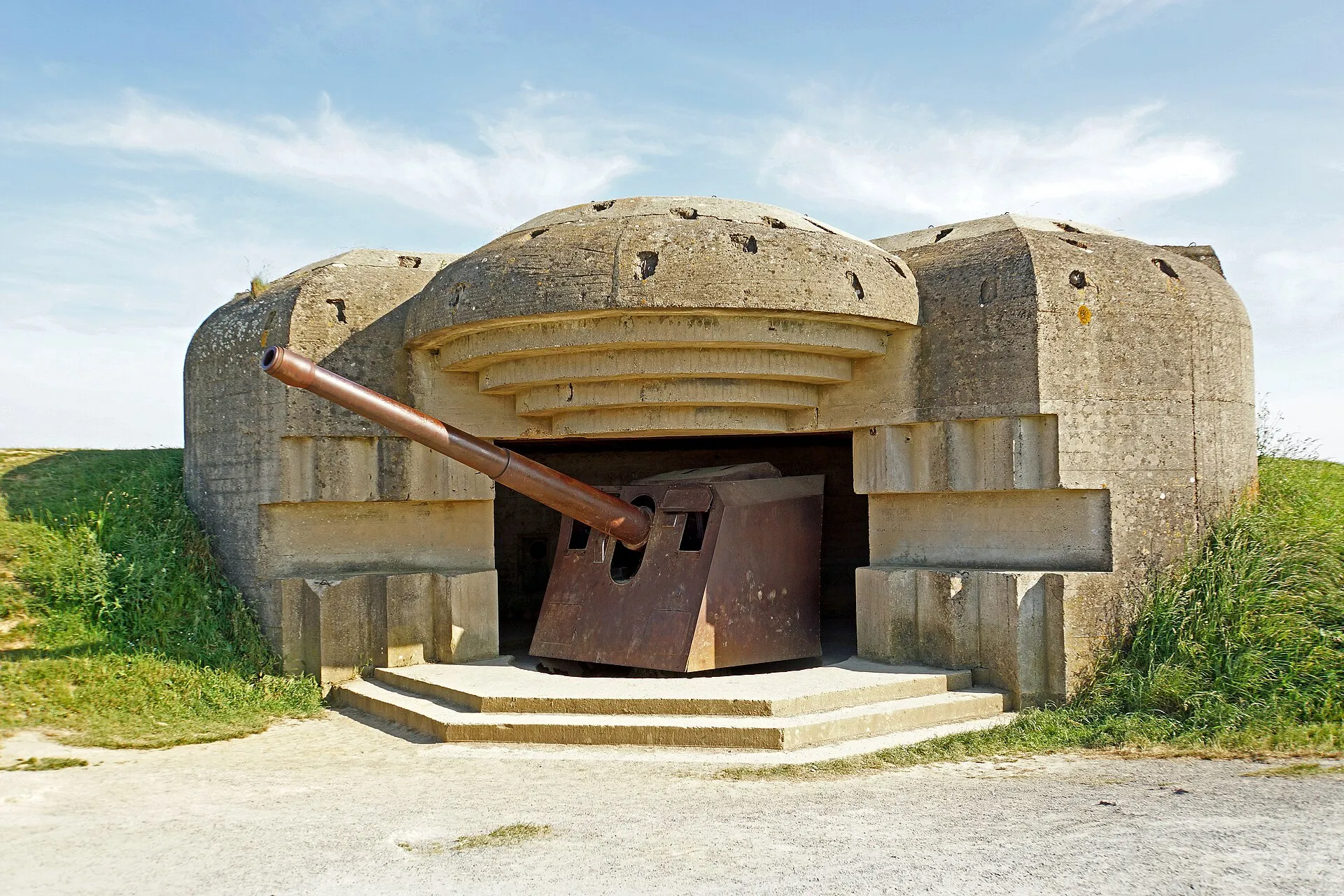
Between Arromanches-les-Bains and Port-en-Bessin, set on a plateau overlooking the Channel, the German battery at Longues-sur-Mer is a one-of-a-kind site among the D-Day beaches: it is the only battery in the area to have kept its original guns, still in place in their casemates. Just 6 km from our village and freely open all year round, it is one of the most striking visits — and one of the easiest to arrange — of any stay in Normandy.
What is the Longues-sur-Mer battery?
Built by the German occupier between 1943 and the spring of 1944, the Longues-sur-Mer battery formed part of the Atlantic Wall, the line of fortifications meant to deny the Allies any landing on the coasts of occupied Europe. Manned by the German navy, it fielded four reinforced-concrete casemates, each housing a 150 mm naval gun with a range of around 20 kilometres — enough to cover a wide stretch of the Seine Bay.
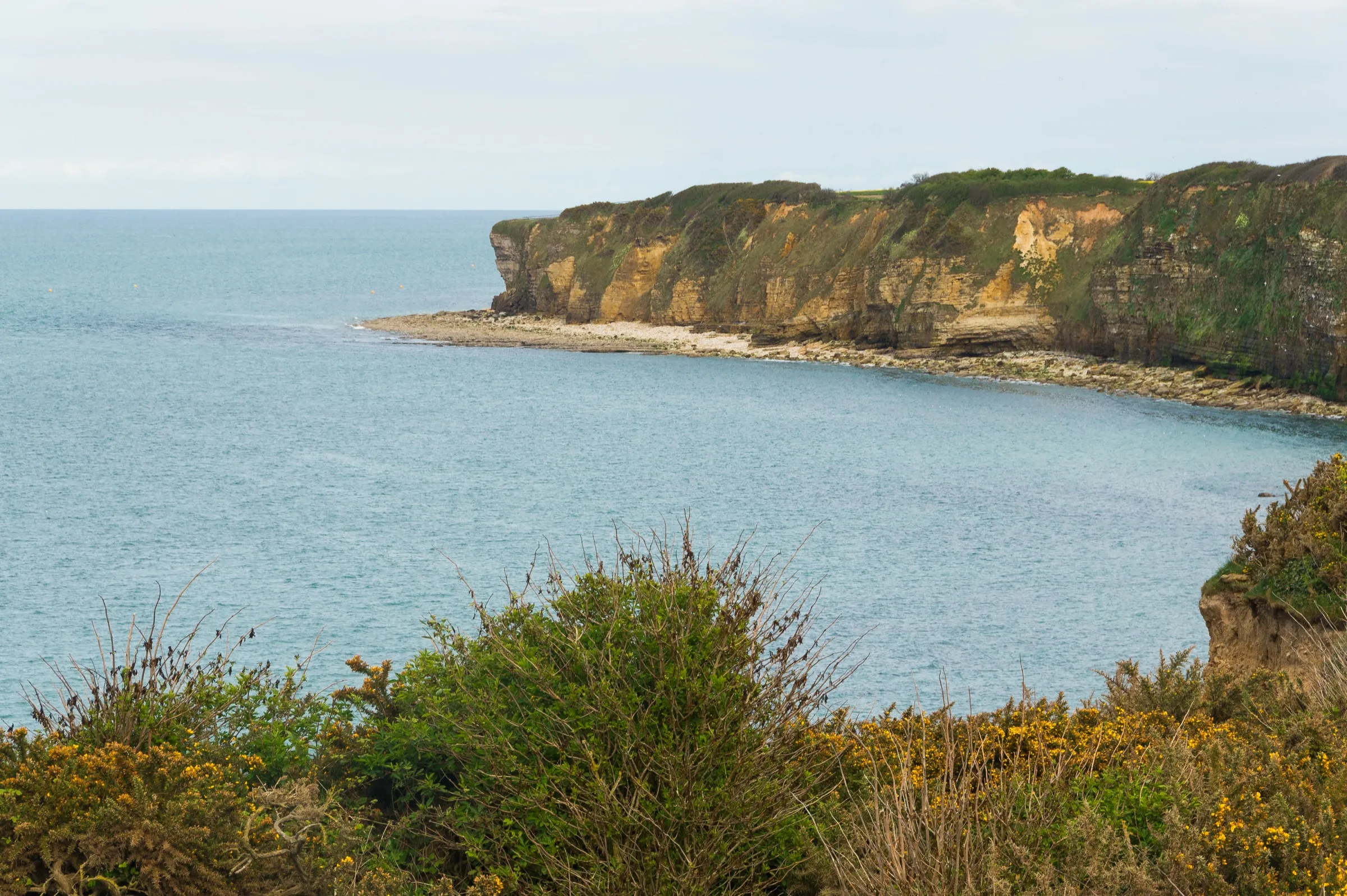
Some 300 metres in front of the casemates, at the cliff edge, a two-level fire-control post worked out the coordinates of targets and relayed them to the guns. The whole position, completed by ammunition stores and close defences, occupied a formidable spot: halfway between Omaha Beach to the west and Gold Beach to the east, directly facing the fleet that would appear on the morning of 6 June 1944.
What happened here on 6 June 1944?
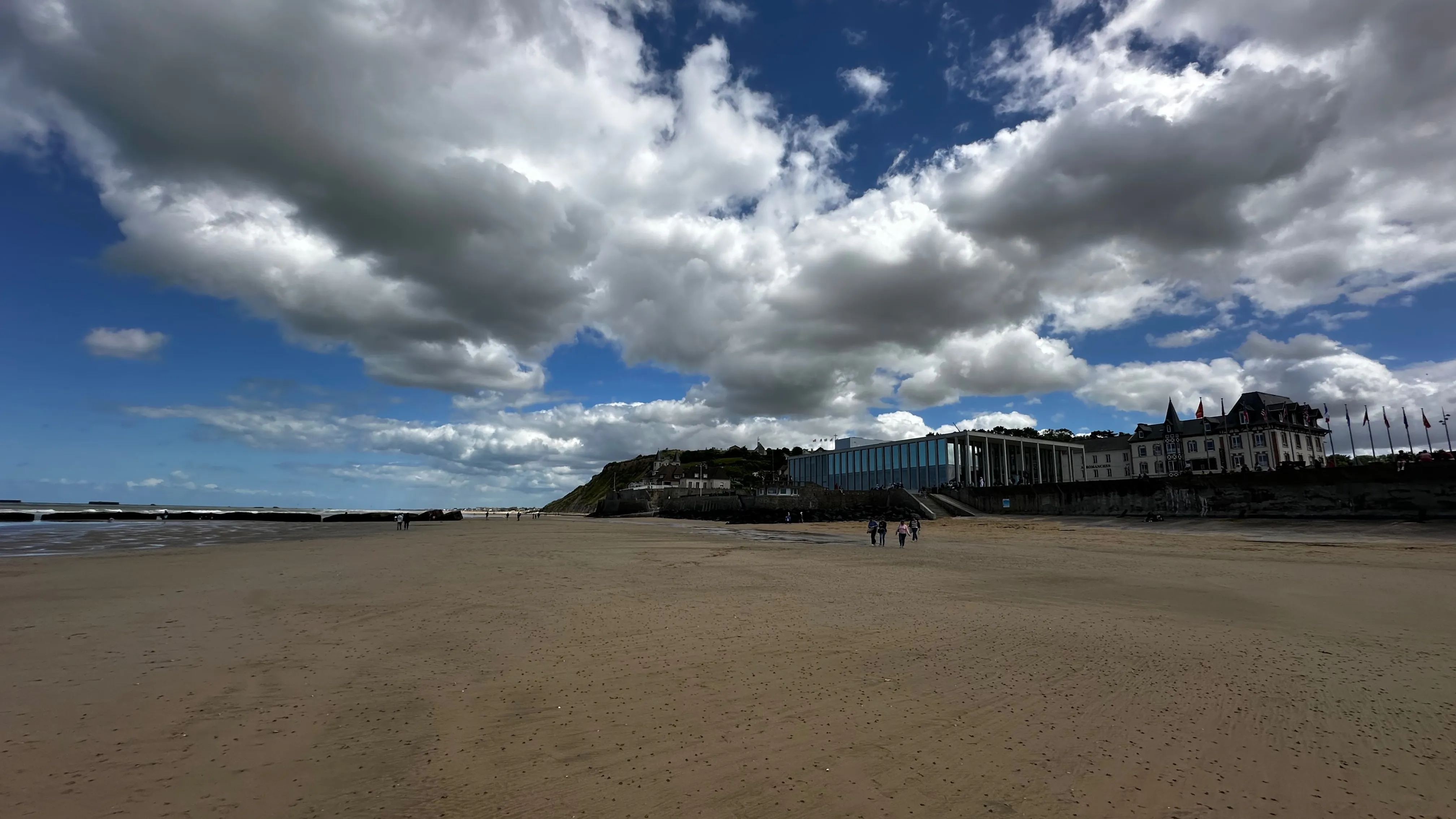
At dawn on D-Day, the battery opened fire on the Allied fleet. An artillery duel then began with the warships, among them the British cruiser HMS Ajax and the French cruisers Georges Leygues and Montcalm. Shelled, then caught under the ships' accurate fire, the battery was silenced during the day. The following day, 7 June, its garrison surrendered to British troops coming from Gold Beach — the beach you can explore from Arromanches, where the Mulberry B artificial harbour was being assembled at that very moment.
A detail that strikes every visitor: the impacts of the naval shells are still legible on the concrete, and one of the guns, torn open, bears witness to the violence of the exchanges.
Why is this site unique in Normandy?
Everywhere else along the D-Day beaches, the guns were scrapped after the war. At Longues-sur-Mer, the artillery pieces stayed in their casemates: today it is the only battery in the D-Day area to display its original guns in situ. At a single glance you grasp what the Allied soldiers were facing — no reconstruction, no museum produces the same effect.
Film buffs will also recognise the place: the fire-control post served as a setting for the film The Longest Day (1962). Note that the interior of this observation post is now closed to the public for safety reasons, but you can walk up to it freely along the path.
What is a visit like?
Good news for travel budgets: access to the site is free and open, all year round. A few practical pointers:
- Duration: allow 30 to 45 minutes to take in the site at your own pace; an interpretive trail of around 1 km, lined with explanatory panels, links the casemates to the observation post at the cliff edge.
- Guided tours: in season, the tourist office offers guided tours in French and English starting from the information point on the site. As times and prices are liable to change, check the battery's page on the official Bayeux Bessin Tourism website before you come.
- Visiting conditions: the plateau is exposed to the wind off the sea — bring a windproof layer even in summer, and closed shoes for the grassy ground around the casemates. Keep to the paths near the cliff.
- With children: the site, out in the open and with no queues, works very well for families; the casemates can be explored freely.
How to get there from Arromanches?
The battery is about 6 km west of Arromanches, in the commune of Longues-sur-Mer (address: Site de la Batterie, 14400 Longues-sur-Mer):
- By car: around ten minutes along the D514 coast road, towards Port-en-Bessin; the site is signposted from the departmental road.
- On foot: keen walkers can reach the battery along the coastal path that runs above the cliffs — a superb walk, described in our article on the cliffs and coastal path of Arromanches. Plan for the return trip, or a lift back by car.
- From Bayeux: reckon on about ten kilometres heading north, which lets you combine the battery with the tapestry and the cathedral in the same day.
If you are looking for somewhere to stay near the Longues-sur-Mer battery, Arromanches is the most natural base: in the heart of the Gold Beach area, between Bayeux, Port-en-Bessin and Courseulles, the village lets you reach every site without ever driving more than a few minutes. Our weekend itinerary along the D-Day beaches will help you string the stops together in the right order.
Make Arromanches your base
After your visit, head back down to the bay to rejoin the sea, the museum and the caissons of Port Winston: our studio in Arromanches awaits you a few minutes from the beach, ideally placed halfway between Longues-sur-Mer and the other D-Day sites. A simple, comfortable base for exploring the Bessin from sunrise to sunset.
Cover photo: Dennis Jarvis, CC BY-SA 2.0 licence, via Wikimedia Commons.
Frequently asked questions
Is it free to visit the Longues-sur-Mer battery?
Yes, free access to the site is open all year round. Only the 2-hour guided tours offered in season by the tourist office are paid.
Why is the Longues-sur-Mer battery unique among the D-Day beaches?
It is the only battery in the area to have kept its four original 150 mm naval guns in place in their concrete casemates — everywhere else, the guns were scrapped after the war.
How long should you allow for the visit, and how do you get there from Arromanches?
Allow 30 to 45 minutes to walk the roughly 1 km interpretive trail at your own pace. The battery is about 6 km west of Arromanches, around a ten-minute drive along the coast road.