Places to visit Published on 20 May 2026
Arromanches 360: the circular cinema by the sea
Discover Arromanches 360 and its film The 100 Days of Normandy: 9 screens, 20 minutes of immersion and a viewpoint over the Mulberry harbour. 2026 essentials.
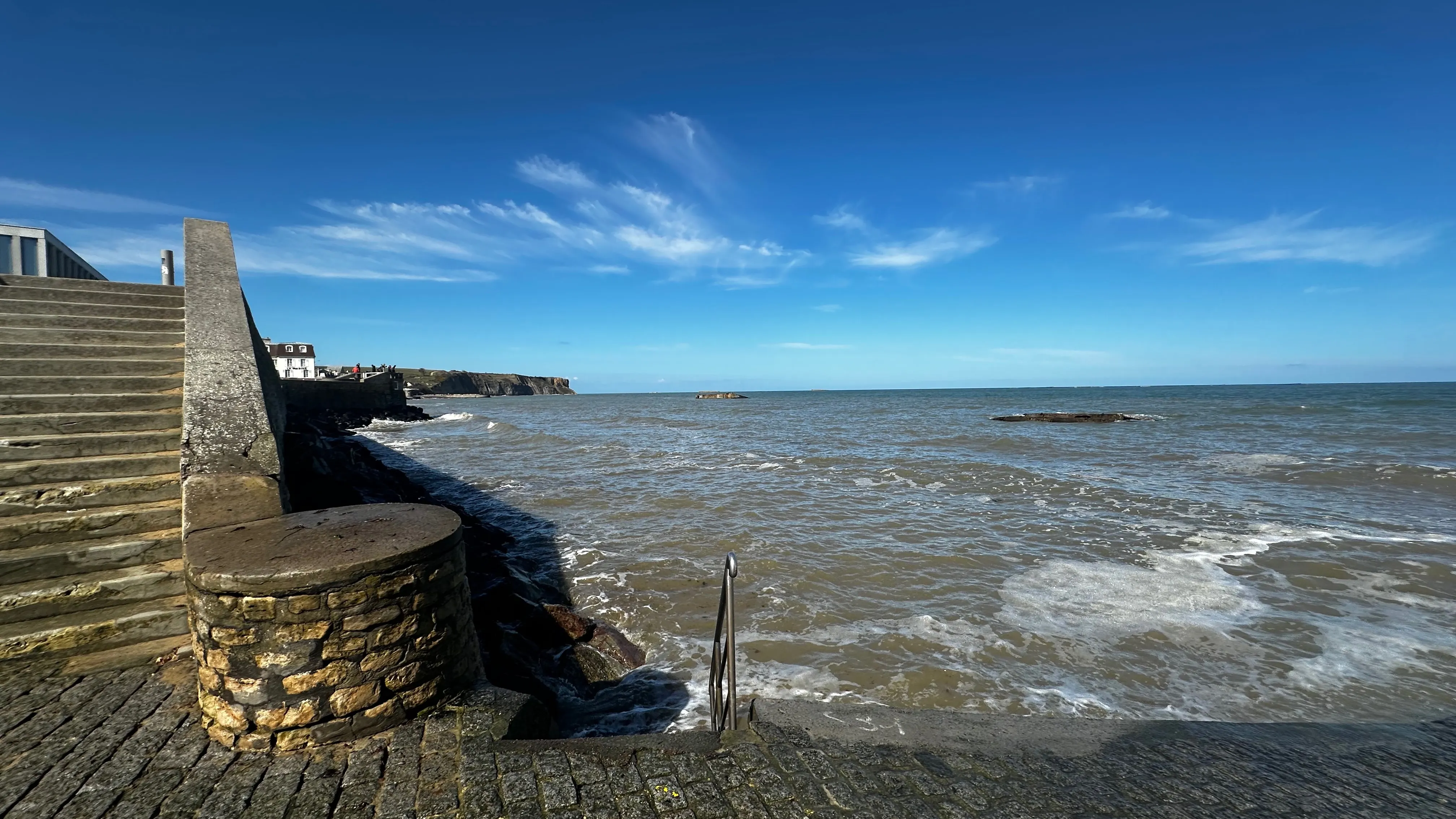
Perched on the cliff to the east of Arromanches-les-Bains, the circular cinema Arromanches 360 is one of the most unusual attractions along the D-Day beaches. There is no conventional auditorium here: you stand at the centre of a rotunda, surrounded by nine screens projecting archive footage all at once. Twenty minutes later, you step back out facing the bay — the very place where the remains of the artificial harbour still break the surface at low tide. It is a short, intense experience, and it pairs beautifully with the other sites at Arromanches.
What exactly is Arromanches 360?
Arromanches 360 is a circular cinema run by the Mémorial de Caen. What sets it apart is its layout: nine screens arranged in a full 360-degree circle around the audience, who remain standing in the middle of the room. You cannot possibly take it all in at once — and that is precisely the point. Your eye roams, catching a face here, a landscape there, and the immersion takes hold without any spectacular trickery, through the sheer power of the archive images alone.
The building itself, a rotunda set on the Calvaire cliff, has become a familiar shape in the Arromanches landscape. You can reach it from the village on foot along a footpath, or by car (there is parking nearby), and the climb earns its reward: the view waiting at the top is very much part of the visit.
What is the film "The 100 Days of Normandy" about?
The film on show, "The 100 Days of the Battle of Normandy", retraces the decisive hours that followed the D-Day landings of 6 June 1944. Over 20 minutes, footage drawn from British, Canadian, American, German and French archives answers from one screen to the next, from the assault on the five beaches to the bombing of Le Havre in September 1944, which brought these hundred days of battle to a close.
What strikes you is the point of view. The film pays tribute to the soldiers who came to liberate Europe, but also to the Norman civilians caught up in the fighting. The faces of local people, towns reduced to rubble, columns of refugees — these are the realities that conventional museums tell through objects, and that the 360 makes you feel through image alone, without any superfluous commentary.
Screenings run every 30 minutes, which makes the visit very easy to slot into a day: there is no need to book a specific time, and you rarely wait more than half an hour.
What are the opening times and prices in 2026?
Here are the current practical details (the prices quoted are valid until 31 December 2026):
- Full price: €7 per adult
- Reduced price: €6 (students and over-65s, among others)
- Family ticket: €17 (two adults and one child aged 10 to 18, or one adult and two children)
- Free for under-10s
- Combined ticket with the Mémorial de Caen: €24
The cinema is open continuously through the day — from 10am to 6pm in spring and summer, with shorter hours out of season. Before setting off, check the day's opening times and, if needed, buy your tickets on the official Arromanches 360 website, or call 02 31 06 06 45. The cinema is on chemin du Calvaire, in Arromanches-les-Bains.
Allow around 45 minutes on site including the viewpoint — it is one of the shortest visits in the area, perfect alongside an already busy programme, or as a rainy-day fallback.
Why is the viewpoint worth the climb on its own?
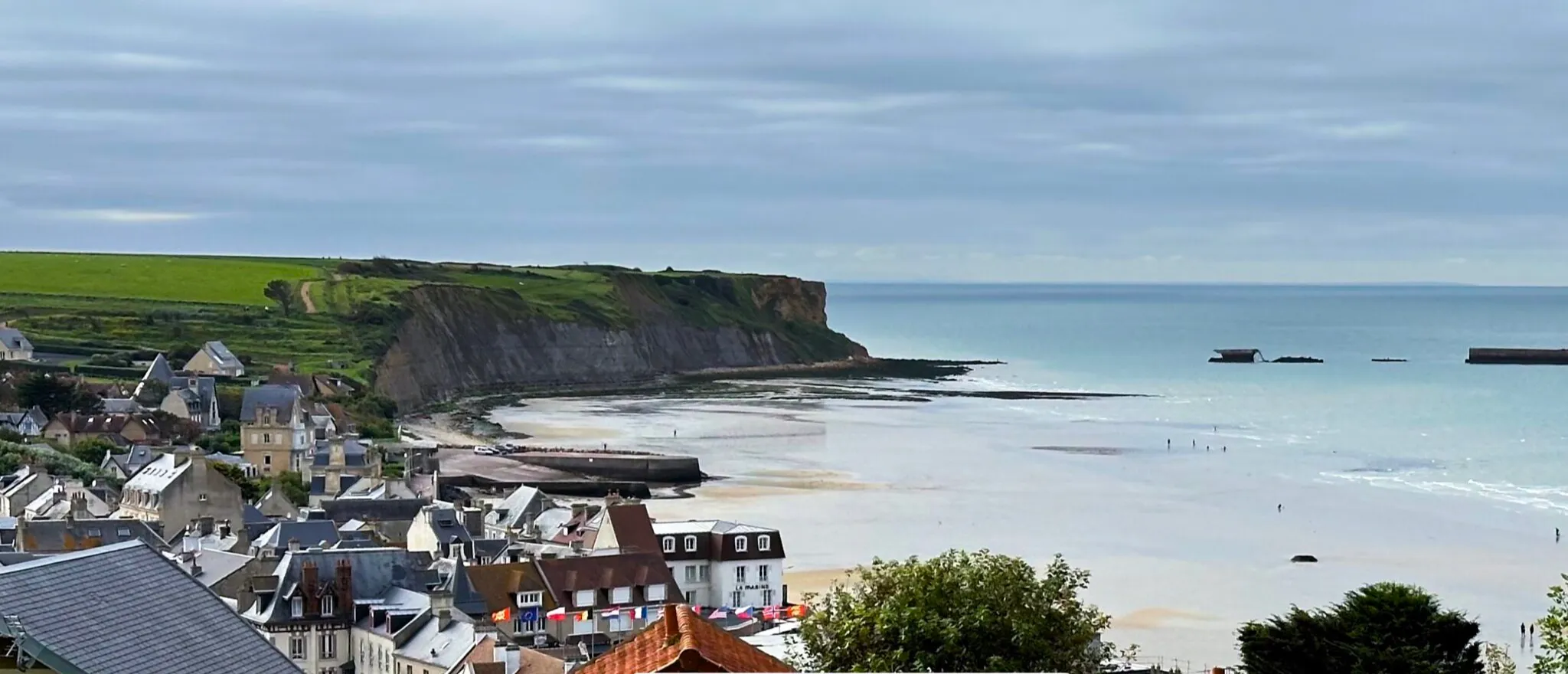
Even without going inside, the site is worth the climb. The viewing terrace that wraps around the rotunda offers one of the finest views over the bay of Arromanches: below, the village nestled between its two cliffs; out to sea, the Phoenix caissons of the Mulberry artificial harbour, lined up in an arc for more than eighty years.
It is from this height that you best grasp the scale of the 1944 undertaking — the floating breakwater, the platforms, the roadways that linked the open sea to the beach. To take in the full story of this logistical feat, follow up with our article on the Mulberry artificial harbour at Gold Beach: the view from above and the story from below complement each other perfectly.
At low tide, the more intrepid then make their way back down to the beach to get up close to the remains stranded on the sand. And at sunset, the viewpoint becomes one of the most sought-after photo spots on the coast.
How do you plan your visit alongside the other Arromanches sites?
Within just a few hundred metres, Arromanches packs in two major attractions that speak to each other:
- The D-Day Landing Museum, on the seafront, tells the story of how the artificial harbour was designed and operated, with models and collections — we devote a full guide to the D-Day Landing Museum to it.
- Arromanches 360, up on the cliff, sets that harbour within the wider story of the Battle of Normandy, at human scale.
The ideal order? Start with the museum down below to understand how the harbour worked, then climb up to the 360 for the emotion and the view, and finish on the beach at low tide. Half a day is enough, which leaves the other half for Longues-sur-Mer, Bayeux or the coast towards Courseulles-sur-Mer.
Stay a stone's throw from the circular cinema
Staying in Arromanches means you can climb up to the viewpoint at first light, before the first coachloads of visitors arrive, and return in the evening when the golden light sets the bay ablaze. Our studio in Arromanches, newly refurbished and ideally placed, puts you a few minutes' walk from the seafront and chemin du Calvaire. Drop off your bags and explore the D-Day beaches like a local.
Frequently asked questions
How much does it cost to visit Arromanches 360?
Full price is €7 per adult, €6 reduced (students and over-65s, among others), €17 for a family ticket (two adults and one child aged 10-18, or one adult and two children), and entry is free for under-10s. A combined ticket with the Mémorial de Caen is available for €24. Prices quoted are valid until 31 December 2026.
How long does the screening last, and do you need to book?
The film lasts 20 minutes and screenings run every 30 minutes, with no booking required — you rarely wait more than half an hour. Allow around 45 minutes on site including the viewpoint.
What are the opening hours of Arromanches 360?
The cinema is open continuously from 10am to 6pm in spring and summer, with shorter hours out of season. It's best to check the day's opening times on the official website before you go.